
The Ultimate Guide to TLB Training in Nelspruit: Kickstart Your Earthmoving Career
If you have ever driven past a bustling construction site or a sprawling agricultural project, chances are you have seen a Tractor Loader Backhoe (TLB) hard at work. These versatile, powerful machines are the absolute backbone of the heavy machinery industry. For anyone looking for TLB training in Nelspruit to secure a stable, well-paying job in construction, mining, or agriculture, gaining the right certification is the perfect first step.
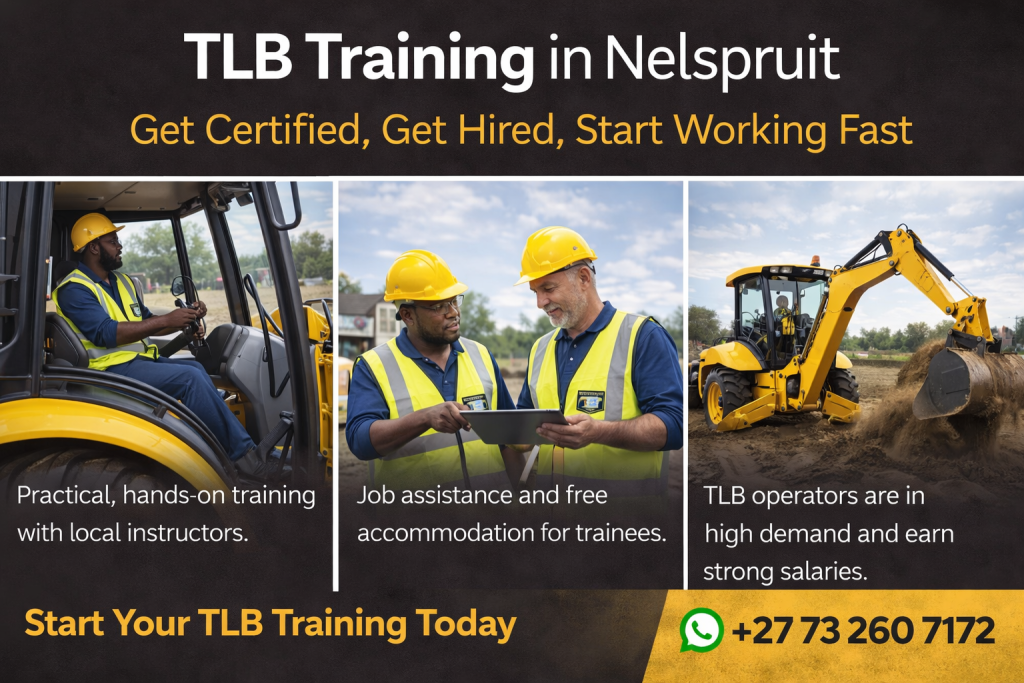
If you are based in Mpumalanga or willing to travel, securing TLB training in Nelspruit is one of the smartest career moves you can make. The region is a booming hub for industrial development, offering endless opportunities for skilled operators. In this comprehensive guide, we will walk you through exactly what a TLB is, why Nelspruit is the ideal place to learn, what to expect from a top-tier training program, and how you can accelerate your journey into the workforce.
What Exactly is a TLB (Tractor Loader Backhoe)?
Before diving into the specifics of the training, it is important to understand the machinery. A TLB, or Tractor Loader Backhoe, is a heavy equipment vehicle that consists of a tractor-like unit fitted with a shovel/bucket on the front and a small backhoe on the back.
Because of this dual functionality, the TLB is incredibly versatile. It can perform a wide variety of tasks that would normally require multiple different machines. Some of these tasks include:
- Trenching and Excavation: Digging trenches for pipes, cables, or foundation footings.
- Loading and Unloading: Moving heavy materials like dirt, gravel, sand, and construction debris.
- Landscaping and Grading: Leveling terrain for new builds or agricultural expansion.
- Transportation of Materials: Short-distance hauling of tools and aggregates across a busy site.
Because of its compact size compared to massive excavators or bulldozers, a TLB is highly maneuverable. It can be driven on standard roads (unlike tracked vehicles), making it a favorite for municipal work and urban construction sites. This versatility means that certified operators are always in exceptionally high demand.
Why Choose TLB Training in Nelspruit?
You might be wondering, “Why should I specifically look for TLB training in Nelspruit?”
Nelspruit (Mbombela) is not just the capital of Mpumalanga; it is the economic and industrial gateway to the region. The province is heavily invested in mining, agriculture, forestry, and continuous infrastructure development. By training in Nelspruit, you are placing yourself right at the epicenter of where the jobs are.
1. Proximity to Major Industries
Mpumalanga is renowned for its mining sector and massive agricultural estates. Both of these industries rely heavily on earthmoving equipment. By completing your training locally, you network with local training centers that often have direct ties to these hiring companies.
2. Tailored Local Expertise
Training centers in Nelspruit understand the local terrain. The soil conditions, the weather patterns, and the specific demands of local contractors are all woven into the practical training you receive. You aren’t just learning how to operate a machine in a vacuum; you are learning how to operate it in the exact conditions you will face on the job.
3. Accessible Facilities with Great Perks
Many top-tier vocational centers in Nelspruit cater to students coming from out of town or rural areas. It is common to find training facilities that offer exceptional perks, such as free student accommodation during your course, making it highly accessible for anyone willing to put in the work, regardless of where they currently live.
The Massive Benefits of Becoming a Certified TLB Operator
Making the decision to enroll in TLB training in Nelspruit can be life-changing. Here is why stepping into the cab of a backhoe loader is a fantastic career choice:
High Employability and Job Security
Because the TLB is a multi-purpose machine, operators are needed on almost every single work site. While a specialized towering crane operator might only be needed for specific high-rise projects, a TLB operator is needed to dig the initial trenches, move the daily rubble, and perform the final site grading. This means consistent, reliable work.
Excellent Earning Potential
Skilled machinery operators in South Africa earn competitive salaries. As you gain more hours of experience and perhaps add other machinery to your skillset (like excavators or dump trucks), your earning potential scales dramatically. Overtime and project-based bonuses are also highly common in the construction and mining sectors.
Low Barrier to Entry
One of the most appealing aspects of this career path is that it does not require years of expensive university education. In fact, many top training programs proudly operate on a “no qualifications needed” basis to get started, provided you have a basic understanding, a willingness to learn, and meet the minimum age and identification requirements.
Global Transferability
The skills you learn during your TLB training in Nelspruit are not restricted to South Africa. Earthmoving principles, hydraulic controls, and safety protocols are largely universal. A recognized certification can be your ticket to working across the African continent or even overseas.
What to Expect from a Professional TLB Training Course
If you are ready to take the plunge, it helps to know what your training will actually look like. A standard, high-quality TLB course usually runs for about two weeks. This timeframe strikes the perfect balance between intensive learning and practical mastery.
The training is universally split into two main components: Theoretical Knowledge and Practical Operation.
Part 1: The Theoretical Foundation
You cannot safely operate a multi-ton piece of machinery without understanding how it works and the rules that govern its use. The classroom portion of your training will cover:
- Health and Safety Regulations: Understanding the Occupational Health and Safety (OHS) Act. You will learn how to identify site hazards, understand the importance of Personal Protective Equipment (PPE) like high-vis hardhats, and learn emergency shutdown procedures.
- Machine Components and Mechanics: You will learn the names and functions of every part of the TLB, from the stabilizers and boom to the hydraulic cylinders and bucket teeth.
- Pre-Operational Checks: A critical part of the job. You will learn how to conduct daily walk-around inspections to check for hydraulic leaks, tire pressure issues, structural damage, and fluid levels.
- Reading Site Plans: Basic instruction on how to interpret site layouts so you know exactly where to dig and where underground utilities might be hiding.
Part 2: Practical, Hands-On Operation
This is where the real fun begins. You will step out of the classroom and into the cab. Under the strict supervision of experienced, accredited assessors, you will learn to master the controls.
- Basic Maneuvering: Learning how to drive the TLB safely, understanding its turning radius, and getting a feel for the braking and acceleration.
- Operating the Front Loader: You will practice scooping, lifting, carrying, and dumping materials. You will learn how to keep the machine balanced while the front bucket is fully loaded.
- Mastering the Backhoe: This is often the trickiest part. You will learn how to deploy the stabilizer legs, rotate the seat, and operate the complex joystick controls to manipulate the boom, stick, and bucket for precise trench digging.
- Trenching Techniques: Learning how to dig a straight, level trench to specific depth requirements without collapsing the sidewalls.
- Backfilling and Grading: Using the front bucket to push dirt back into a trench and smooth out the ground.
Key Skills You Will Develop
By the end of your two-week training period, you will have transformed from a novice into a confident operator. Beyond just pulling levers, you will develop spatial awareness, hand-eye coordination, and a deep respect for site safety.
You will also learn the soft skills necessary for the job, such as clear communication. Heavy machinery environments are loud and dangerous; you will be trained on how to use and read universal hand signals to communicate with spotters and ground workers effectively.
How to Choose the Best Training Centre in Nelspruit
With the high demand for operators, several training providers have popped up. However, not all training is created equal. When searching for the best TLB training in Nelspruit, keep the following criteria in mind to ensure you get the best return on your investment:
1. Industry Accreditation
This is non-negotiable. Ensure the training center is fully registered and accredited by the relevant South authorities, such as the Construction Education and Training Authority (CETA) or the Transport Education Training Authority (TETA). A certificate from an unaccredited school is essentially worthless on a professional job site.
2. Condition of the Machinery
Visit the facility if possible, or check their promotional materials carefully. You want to learn on modern, well-maintained machinery. If a school is using ancient, broken-down TLBs, your training will be compromised, and you won’t be prepared for the modern equipment used by top employers.
3. Student Support and Perks
Look for facilities that go the extra mile. Because training often costs anywhere from R3000 to R3500 for a two-week TLB course, you want maximum value. Seek out centers that offer free accommodation for the duration of your course. Furthermore, the very best centers offer job assistance after training, helping connect their newly certified operators with local recruitment agencies or contractors looking for fresh talent.
4. Instructor Experience
Your trainers should be seasoned veterans of the construction or mining industry. They shouldn’t just be teachers; they should be former operators who can share real-world tips, tricks, and survival guides for the modern job site.
Career Opportunities After Completing Your Course
Once you have your certification in hand, the job market opens up significantly. Where can you look for work?
- Construction Companies: From residential home builders needing foundations dug, to massive commercial contractors building shopping malls and highways.
- Mining Operations: Mpumalanga’s coal and gold sectors constantly require earthmoving for site maintenance, road clearing, and material transport.
- Municipalities: Local governments hire TLB operators for water pipe maintenance, road repairs, and electrical cable trenching.
- Agriculture: Large farms use TLBs for land clearing, creating irrigation trenches, and moving bulk feed or fertilizer.
- Freelance/Owner-Operator: Many experienced operators eventually purchase or lease their own TLB and work as independent contractors, hiring themselves out at lucrative hourly or daily rates.
Frequently Asked Questions (FAQs)
How long does TLB training take?
Most comprehensive, accredited TLB training courses take about 2 weeks to complete. This includes both the theoretical classroom work and the practical, hands-on driving and operating experience.
Do I need a matric certificate to enroll?
Generally, no! Many reputable training centers in Nelspruit proudly operate with a “no qualifications needed” policy for entry-level operator courses. You simply need to be of legal working age and possess a valid South African ID or passport.
How much does TLB training cost in Nelspruit?
While prices can fluctuate, you can generally expect a two-week TLB course to cost around R3500. Always check if this fee includes your final assessment, certification, and any available perks like accommodation.
Do I need a driver’s license to operate a TLB?
If you are operating the TLB strictly on a closed construction or mining site, a standard driver’s license is not always legally required (though the machine certification is). However, if you need to drive the TLB on public roads to get from one site to another, you will need an appropriate code driver’s license. Having one makes you highly preferred by employers.
Is it difficult for women to become TLB operators?
Absolutely not! The heavy machinery industry is rapidly diversifying, and many companies actively seek female operators. Operating a TLB is about skill, finesse, and safety, not brute physical strength.
Conclusion: Take Control of Your Future Today
The path to a rewarding, high-paying career doesn’t always require a four-year degree. By enrolling in accredited TLB training in Nelspruit, you are taking a direct, hands-on route to job security and financial independence. The construction and mining sectors are waiting for skilled, safety-conscious operators to move the earth and build the future.
Don’t let lack of experience hold you back. Look for a reputable, high-energy training center that offers great perks like free accommodation and post-training job assistance, and take that first step. Equip yourself with the skills that are always in demand. Contact a local Nelspruit training provider today, book your two-week course, and get ready to jump into the driver’s seat of your new career!

… [Trackback]
[…] Read More Information here to that Topic: miningandmachinerytraining.com/tlb-training-in-nelspruit/ […]
… [Trackback]
[…] Find More Information here on that Topic: miningandmachinerytraining.com/tlb-training-in-nelspruit/ […]